

South Africa's small and medium-sized businesses are entering the final stretch of 2026 with a mixed operating picture.
Economic conditions have improved in important respects, including electricity availability and parts of the interest-rate environment, but entrepreneurs continue confronting weak demand in some markets, expensive finance and uneven municipal services.
Developments reported on 2 September underline how important the SME sector remains to any durable expansion in employment.
Electricity stability changes day-to-day economics
Improved power availability has had practical consequences for smaller companies.
Large corporations could spend heavily on solar installations, batteries and generators during severe load shedding. Many SMEs could not.
Reduced disruption therefore removes a disproportionate burden from businesses that previously lost trading hours or had to absorb fuel and backup-power costs.
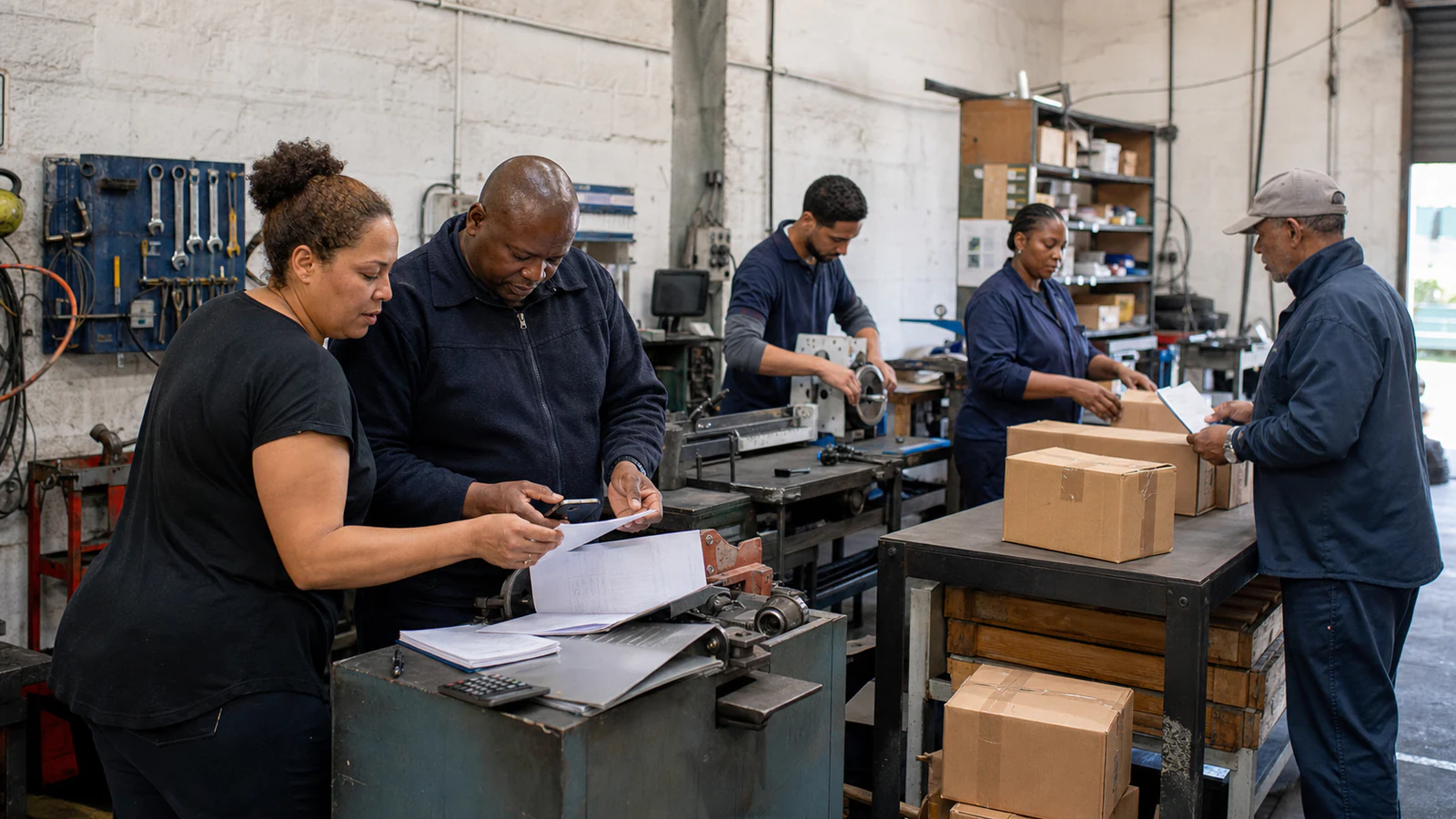
For manufacturers, workshops, restaurants and retailers, predictable electricity makes staffing and inventory planning easier.
Financing remains difficult
Access to capital remains one of the largest barriers facing smaller businesses.
Banks need to manage credit risk, but entrepreneurs without substantial collateral or long trading histories can struggle to qualify for conventional finance.
High borrowing costs amplify the problem.
Even viable companies can experience cash-flow pressure when customers pay slowly while salaries, suppliers and tax obligations fall due on fixed dates.
Working-capital solutions are consequently as important to many SMEs as long-term expansion finance.