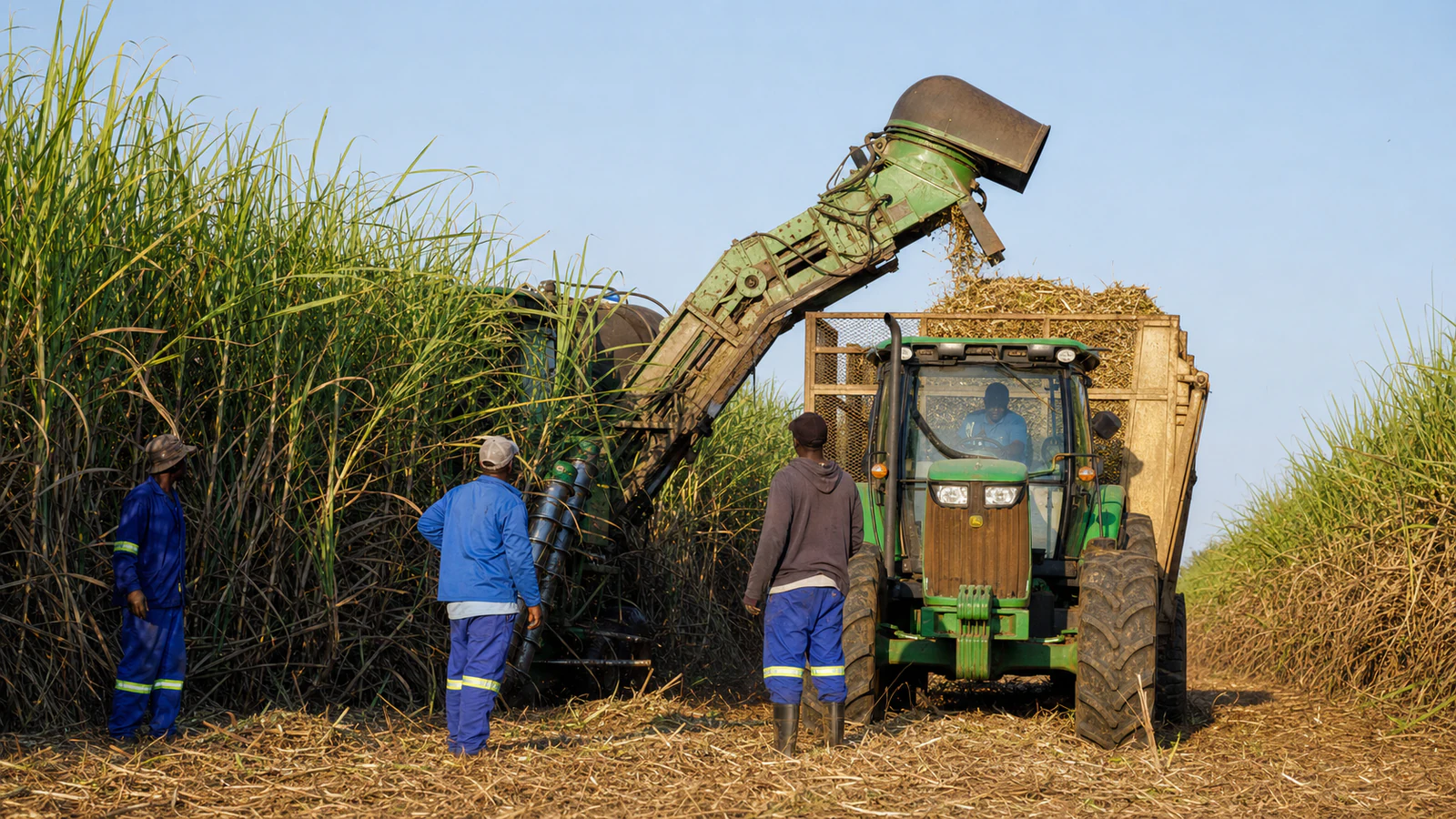
South Africa’s sugar industry has received additional protection from imports through a higher dollar-based tariff, a development with implications for cane growers, mills, food manufacturers and consumers across the domestic sugar value chain.
Tariff protection moves back into focus
The sugar tariff is designed to provide a degree of protection to domestic producers when global prices fall below the reference level used in South Africa’s trade regime.
For local growers and millers, stronger protection can reduce the pressure created by lower-priced imports entering the domestic market. The industry supports agricultural employment and processing activity, particularly in KwaZulu-Natal and Mpumalanga.
Why producers wanted stronger protection
Sugar producers operate with significant exposure to fertiliser, fuel, labour, logistics and electricity costs. At the same time, international sugar markets can be heavily influenced by production conditions and policy in major exporting countries.
That can leave South African producers competing against imported sugar at prices that do not reflect the domestic cost base.
A higher tariff therefore provides breathing room for local production, but it also sharpens the debate over the appropriate balance between industrial protection and input costs for downstream users.
Food manufacturers watch the cost impact
Sugar is an important input for beverage, confectionery, bakery and processed-food manufacturers. Changes in domestic sugar pricing can therefore affect production costs beyond the agricultural sector.
Manufacturers must absorb those costs, improve efficiency or pass some of them through to customers, depending on competitive conditions.
The policy question is consequently broader than the fortunes of cane farmers alone. Authorities must weigh the value of preserving local agricultural and milling capacity against the effect of protection on downstream businesses and consumers.
A major rural value chain
The sugar industry is economically important in regions where alternative large-scale employment opportunities can be limited. Cane farming supports growers, transport operators, contractors and mill employees, while mills anchor industrial activity in several rural communities.
Loss of domestic production can therefore have knock-on effects through local economies.
The sector has also been pursuing diversification opportunities, including renewable energy, biofuels and other cane-derived products, as it looks for new revenue streams beyond traditional refined sugar.
Why it matters for South African business
The tariff decision illustrates the difficult choices involved in South Africa’s localisation and industrial-policy strategy. Protecting strategic domestic capacity can preserve investment and employment, but protection also has costs for businesses that buy the protected product as an input.
For sugar producers, the immediate benefit is a stronger buffer against import competition. For downstream food companies, procurement and pricing strategies will remain important as they manage the domestic cost environment.
Outlook
The longer-term health of the sugar industry will depend on more than tariffs. Productivity, mill efficiency, logistics, energy costs and diversification will determine whether the sector can compete sustainably.
Import protection can create space for adjustment and investment, but the industry's ability to use that space effectively will determine the lasting economic impact.