Sector
Loading page
Business

Government reopens search for SAA strategic equity partner as airline enters next phase

Cabinet has backed a renewed process to find a strategic equity partner for South African Airways, reopening one of the country’s most closely watched state-asset investment questions after the collapse of the previous Takatso transaction.

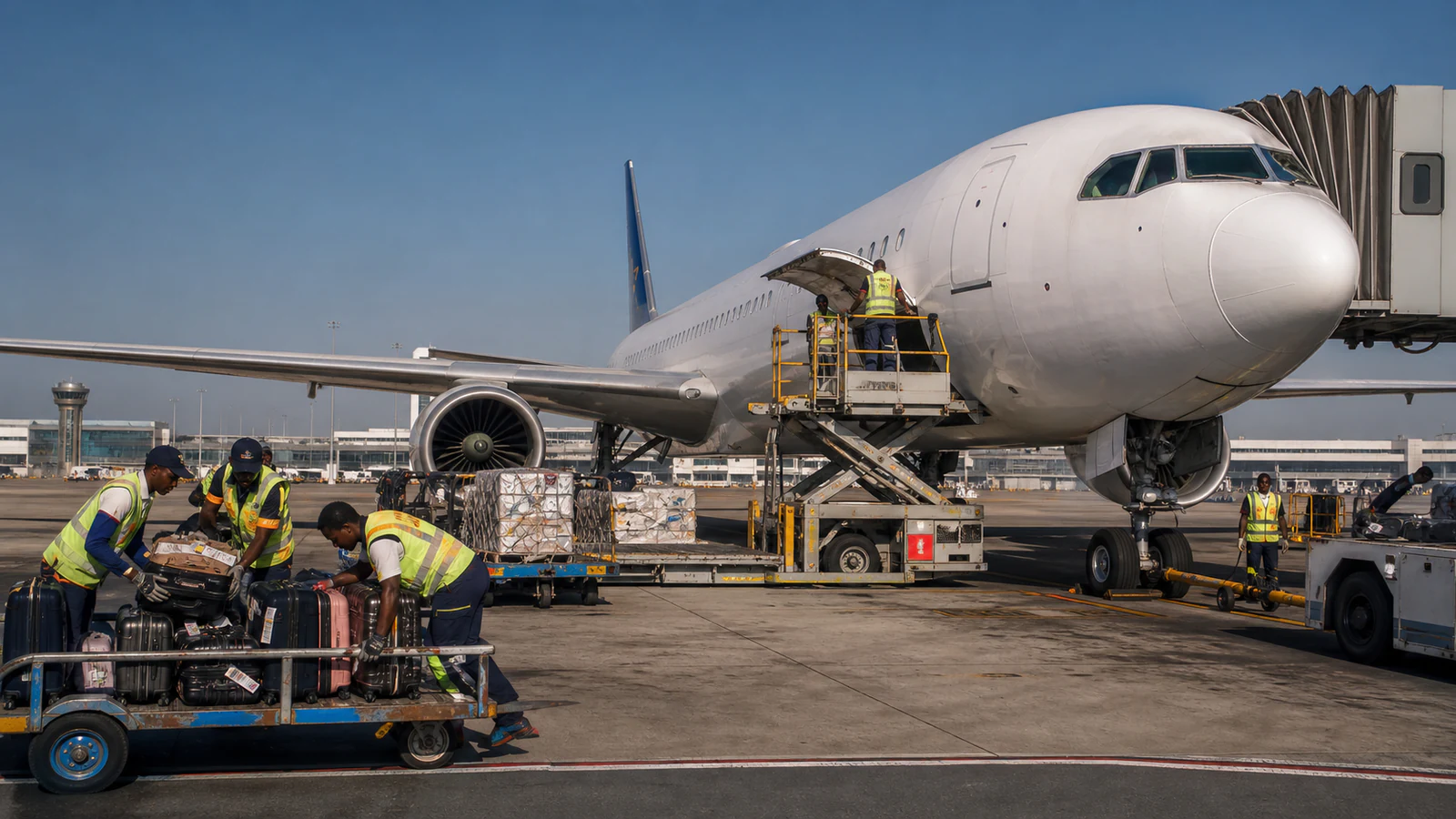
An unbranded passenger aircraft at a South African international airport representing the government’s renewed strategic equity partner process for SAA.
Lead Sector AI-generated image

South Africa is preparing another attempt to bring strategic private capital into South African Airways, reopening a politically and commercially important question about the long-term ownership and funding model of the national carrier.

Cabinet has backed a renewed process to identify a strategic equity partner for SAA, signalling that government still sees private-sector participation as potentially important to the airline’s future despite the failure of the previous Takatso transaction.

The decision comes after years of restructuring at SAA.

The airline emerged from business rescue in 2021 following a prolonged financial crisis that had required repeated state support. Government subsequently selected the Takatso Consortium for a proposed transaction that would have given the private investor a controlling stake.

That deal was ultimately terminated in 2024 after lengthy negotiations.

Its collapse left government with the task of deciding whether SAA could continue developing under state ownership or whether another strategic investor should be sought.

The latest move answers that question, at least in principle.

A new equity-partner process could have substantial implications for SAA’s ability to finance fleet expansion, rebuild international connectivity and compete against better-capitalised global airlines.

Aviation is an unusually capital-intensive business.

Aircraft acquisition or leasing requires significant financial resources, while airlines must continuously fund maintenance, technology, training, fuel and airport operations.

SAA’s historical financial difficulties were partly linked to the challenge of competing commercially while operating within the constraints of a state-owned company.

A strategic investor could potentially provide more than capital.

The right aviation partner could bring fleet expertise, network relationships, procurement advantages and commercial discipline. Partnerships can also expand passenger feed between route networks, improving aircraft utilisation and route economics.

The identity and structure of any future partner will therefore matter as much as the headline investment.

Government will need to determine what stake is available, how the airline will be valued and what level of operational influence an investor would receive.

Those questions proved central to the previous transaction.

The experience of the Takatso process means any new deal is likely to face intense scrutiny around valuation, transparency and the allocation of future funding responsibilities.

SAA today is a substantially smaller airline than it was before business rescue.

That reduced scale can be an advantage because it gives management an opportunity to expand more selectively rather than restoring routes simply to recreate the old network.

But scale also matters in aviation.

Airlines benefit from larger networks, fleet flexibility and connectivity between domestic, regional and long-haul services. SAA therefore needs to determine how quickly it can expand without recreating the financial risks that contributed to its earlier crisis.

A strategic investor could influence that trajectory.

The decision is also significant for South Africa’s broader tourism and business environment.

International air connectivity affects tourism flows, foreign investment and corporate travel. Johannesburg remains one of Africa’s major aviation hubs, while Cape Town has experienced strong growth in direct international services.

SAA competes in that market against African, Middle Eastern and European carriers with substantial fleets and global networks.

The airline therefore needs a clearly defined competitive role.

Regional African connectivity is one potential strength. South Africa remains one of the continent’s largest business and tourism markets, creating opportunities for an airline able to connect regional destinations efficiently through Johannesburg.

Long-haul expansion requires greater caution because wide-body aircraft and international routes involve substantial capital and operating risk.

Any prospective investor will examine those economics carefully.

The new process also has implications for South Africa’s approach to state-owned enterprises.

Government has increasingly signalled an openness to partnerships with private capital in infrastructure and state assets, particularly where fiscal resources are constrained.

The principle is already visible in areas such as electricity generation, logistics and infrastructure investment.

SAA represents a high-profile test of that approach because its financial history has made further taxpayer support politically contentious.

A successful transaction could demonstrate that private investment can be introduced into major state assets while government retains strategic interests.

A poorly structured deal, however, could recreate many of the disputes that surrounded the previous process.

Transparency will consequently be essential.

Potential investors will need clarity on the airline’s financial position, fleet requirements, liabilities and growth strategy. The public will need confidence that any transaction reflects fair value and limits future fiscal exposure.

Competition authorities and other regulators may also become relevant depending on the identity of a bidder.

The process is unlikely to be quick.

Airline transactions involve detailed due diligence, and SAA’s state ownership adds additional governance and policy considerations.

The fact that government is returning to the strategic-equity model is nevertheless significant.

It suggests policymakers believe SAA’s long-term potential can be strengthened through external capital and expertise rather than relying exclusively on the state balance sheet.

The commercial challenge is to find a partner whose objectives align with a sustainable airline strategy.

For South Africa, the objective should not simply be to preserve a flag carrier. It should be to establish an airline capable of competing without returning to a cycle of repeated taxpayer-funded rescues.

A credible strategic investor could help achieve that outcome.

The renewed process therefore represents more than another ownership discussion. It is a test of whether South Africa can structure partnerships around major state assets in a way that attracts capital, protects taxpayers and produces commercially sustainable businesses.

References

Key references