Sector
Post Free Listing
Economy

South African factory slump deepens as Absa PMI falls to 45.8

South African manufacturing conditions deteriorated further in August, with the Absa PMI falling to 45.8 as production and domestic orders weakened sharply, although manufacturers became more optimistic about conditions six months ahead.

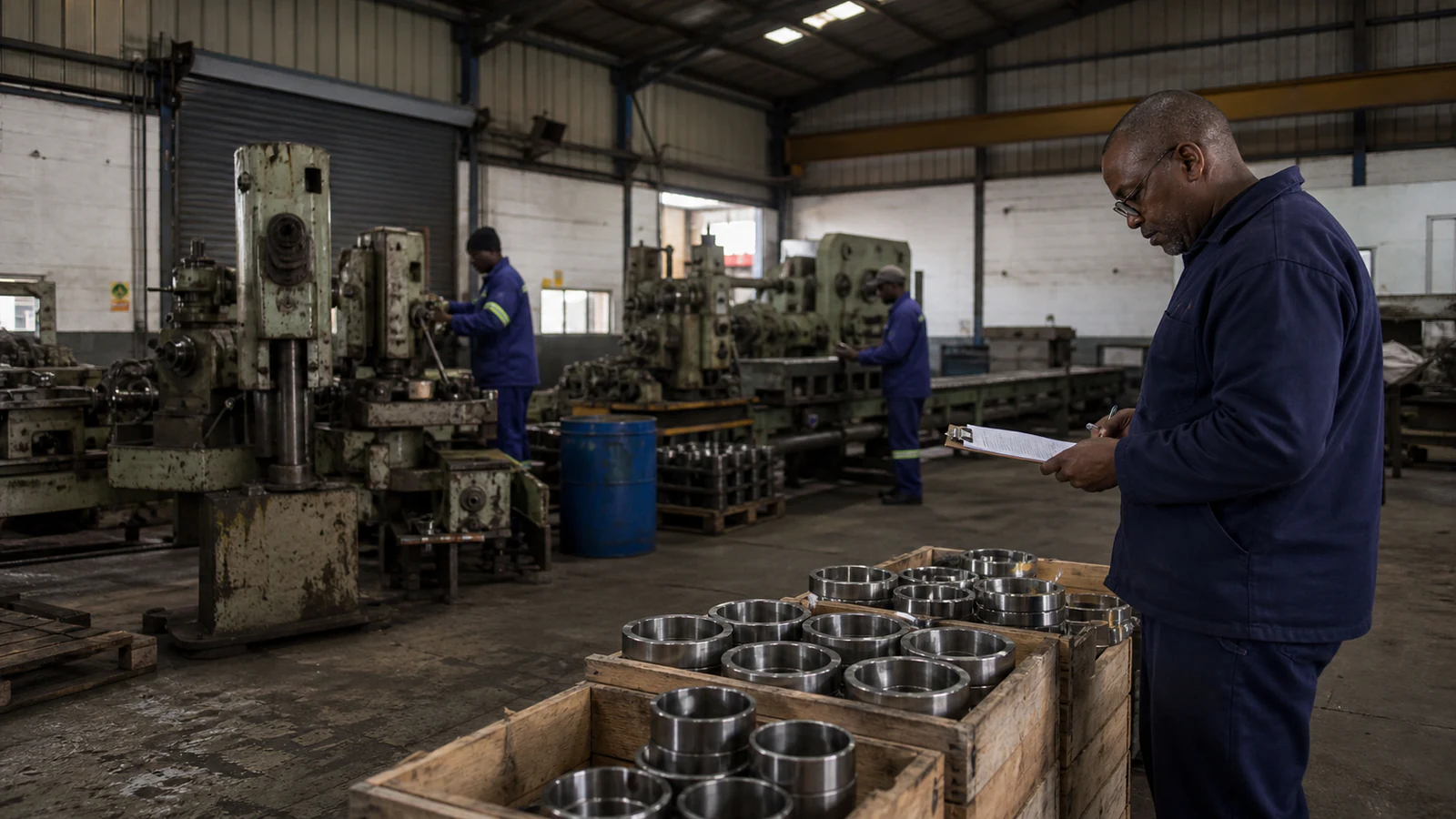
South African manufacturing engineers inspecting an underused production line during a factory slowdown.
Lead Sector AI-generated image

South Africa's manufacturing sector entered the second half of 2026 under renewed pressure, with the latest Absa Purchasing Managers' Index showing worsening factory conditions in August.

The seasonally adjusted PMI fell to 45.8 from 46.8 in July, marking its fourth consecutive monthly decline and its weakest reading of 2026.

A PMI below 50 indicates deteriorating manufacturing conditions. The decline matters because manufacturing is closely connected to employment, exports, logistics, mining supply chains and investment. Persistent weakness can therefore spill over into a much wider portion of the South African economy.

Production drops sharply

The most concerning movement was in actual factory activity. The business activity index fell to 40.2 in August from 48.8 in July, its lowest reading this year.

New sales orders also weakened, dropping to 40.3 from 44.1 and reversing the improvement seen in July.

According to Absa's survey commentary reported by Reuters, the deterioration was largely linked to domestic demand. Respondents pointed to subdued demand, weak consumer confidence and softness in spending on non-essential products.

Export sales, however, showed some improvement.

The contrast between weak domestic demand and improving exports is important for manufacturers deciding where to allocate capacity and sales resources.

Businesses with competitive export channels may be better positioned to offset domestic weakness, while companies heavily dependent on South African discretionary spending could face greater pressure.

Employment still contracting

The PMI employment index improved to 46.2 from 42.2.

That is an improvement in direction but remains below the neutral 50 level, meaning manufacturing employment was still contracting, albeit at a slower pace.

South Africa's unemployment challenge makes the performance of labour-intensive industrial sectors particularly important.

A prolonged period of factory weakness can affect not only direct manufacturing jobs but also transport operators, maintenance contractors, packaging companies and other suppliers supporting production.

Manufacturers see potential improvement

There was one notable positive signal in the survey.

The index measuring expected business conditions six months ahead climbed to 54.7 from 49.3, returning above the neutral 50 mark.

That suggests manufacturers do not necessarily expect the current downturn to persist indefinitely.

Absa said the improvement provided some hope that businesses view the current weakness as temporary, although subdued orders and sharply weaker production mean near-term conditions remain challenging.

A difficult industrial environment

South African manufacturing has long faced structural constraints including logistics costs, electricity reliability, weak domestic investment and uneven demand.

Improved electricity availability has removed one major constraint compared with the severe load-shedding periods of previous years, but reliable power alone cannot guarantee industrial expansion.

Factories still require customers, competitive logistics, predictable policy and access to affordable capital.

The August PMI suggests demand has become the immediate concern.

This has implications for suppliers across the industrial economy. Companies serving manufacturers may encounter slower order books and more aggressive cost management if production remains depressed.

Why it matters for the economy

Manufacturing has an outsized importance because of its links to other industries.

A stronger industrial base supports mining beneficiation, construction, agriculture, automotive production, logistics and exports. It also tends to generate demand for skilled technical labour and business-to-business services.

Conversely, sustained contraction can weaken investment intentions and suppress hiring.

The increase in six-month expectations therefore provides a potential turning point worth watching, but the immediate numbers are unequivocally weak: activity and orders deteriorated materially in August.

For South African businesses, the next several PMI releases will show whether the decline was a temporary mid-year slowdown or the beginning of a more persistent manufacturing contraction.