Sector
Post Free Listing
Business

Eskom profit doubles to R30.3bn as operational recovery gathers pace

Eskom has delivered a second consecutive annual profit, with profit after tax more than doubling to R30.3 billion as improved plant performance and lower reliance on emergency generation strengthened the utility’s finances.

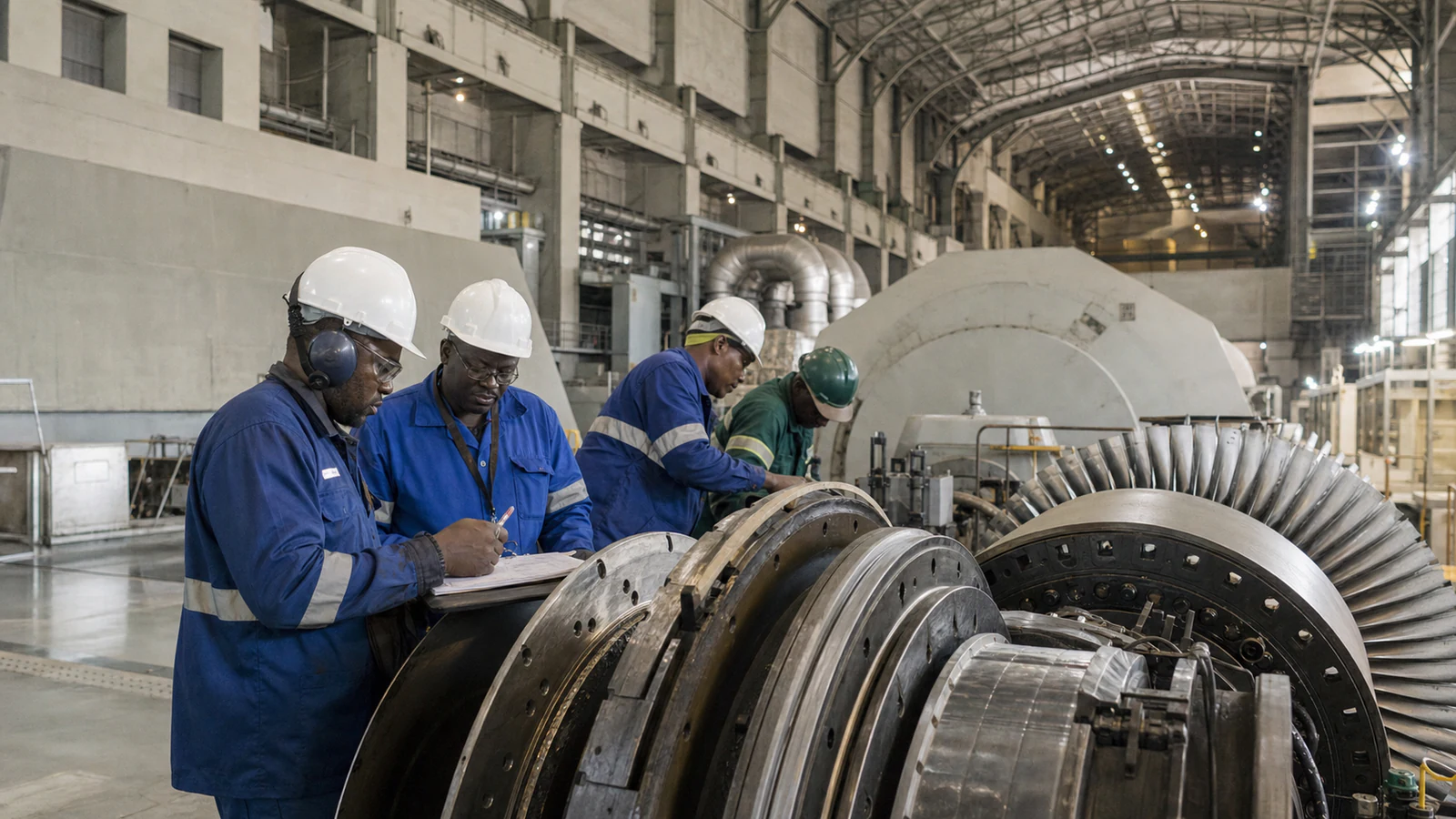
South African electricity engineers inspecting high-voltage substation equipment at sunrise.
Lead Sector AI-generated image

South Africa’s Eskom has reported a second consecutive year of profitability, providing fresh evidence that the operational recovery of the country’s electricity system is translating into materially stronger financial performance.

The state-owned utility reported group profit after tax of R30.3 billion for the financial year ended 31 March 2026, more than double the restated R14.0 billion recorded in the previous year.

Revenue increased 4.1%, supported by the 12.74% standard electricity tariff increase. That benefit was partly offset by a significant decline in electricity sales volumes.

Electricity sales continue to weaken

Eskom sold 178TWh during the year, 6.2% less than in the previous period.

The utility attributed the reduction to factors including weak industrial demand, increased self-generation and improvements in energy efficiency.

That decline deserves attention because Eskom’s financial recovery cannot depend indefinitely on tariff increases compensating for falling volumes.

Large industrial customers have increasingly invested in private renewable generation, while businesses and households have also installed substantial distributed solar capacity.

For Eskom, the challenge is therefore changing from simply producing enough electricity to building a financially sustainable utility in an increasingly decentralised electricity market.

Operational recovery delivers financial benefits

The improvement in generation performance has had a direct financial impact.

Eskom reported an EBITDA margin of 30.63%, compared with a restated 28.75% in the previous year.

Improved generating plant availability, cost discipline and reduced dependence on expensive emergency diesel generation helped strengthen profitability.

Load shedding has also fallen dramatically from the crisis conditions experienced several years ago.

The significance for South African businesses extends beyond Eskom’s income statement. More dependable electricity reduces the need for emergency generation, lowers disruption to production and improves planning certainty for factories, mines, retailers and service businesses.

Municipal debt remains a major threat

The recovery nevertheless remains exposed to one of Eskom’s most persistent structural problems: unpaid municipal electricity accounts.

Municipalities and cities owed Eskom approximately R111.6 billion, according to the results.

Because municipalities account for more than 40% of Eskom’s electricity sales, continued accumulation of arrears represents a substantial threat to cash generation.

Reuters reported that Eskom expects municipal debt could reach R358 billion by 2031 without intervention.

That creates a difficult policy problem. Eskom can improve generation performance and control its own costs, but it cannot achieve lasting financial stability if a significant portion of customers does not pay for electricity supplied.

Debt remains substantial

Eskom’s gross debt increased to about R356 billion.

The balance sheet therefore remains heavily indebted despite the improvement in profitability.

The utility must simultaneously fund maintenance of its coal fleet, invest in distribution infrastructure and expand the transmission grid needed to connect new renewable generation.

Grid expansion is becoming particularly important as independent power producers and large private projects seek connections in regions where transmission capacity is constrained.

Why it matters for South African business

A financially healthier Eskom has implications across almost every sector of the economy.

The utility remains central to industrial production and the national transmission system even as private generation expands.

Improved reliability supports manufacturing output, mining production, investment and business confidence. Lower diesel usage also reduces the financial cost of keeping the system stable.

The second consecutive annual profit therefore represents a meaningful milestone.

But the next phase of Eskom’s recovery will be more complicated than ending severe load shedding. It must address falling electricity demand, municipal arrears, substantial debt and the capital required for transmission expansion.

The results suggest that Eskom has made significant operational progress. Whether that recovery becomes structurally sustainable will depend increasingly on solving problems beyond the generating fleet itself.